In short
The signal that matters
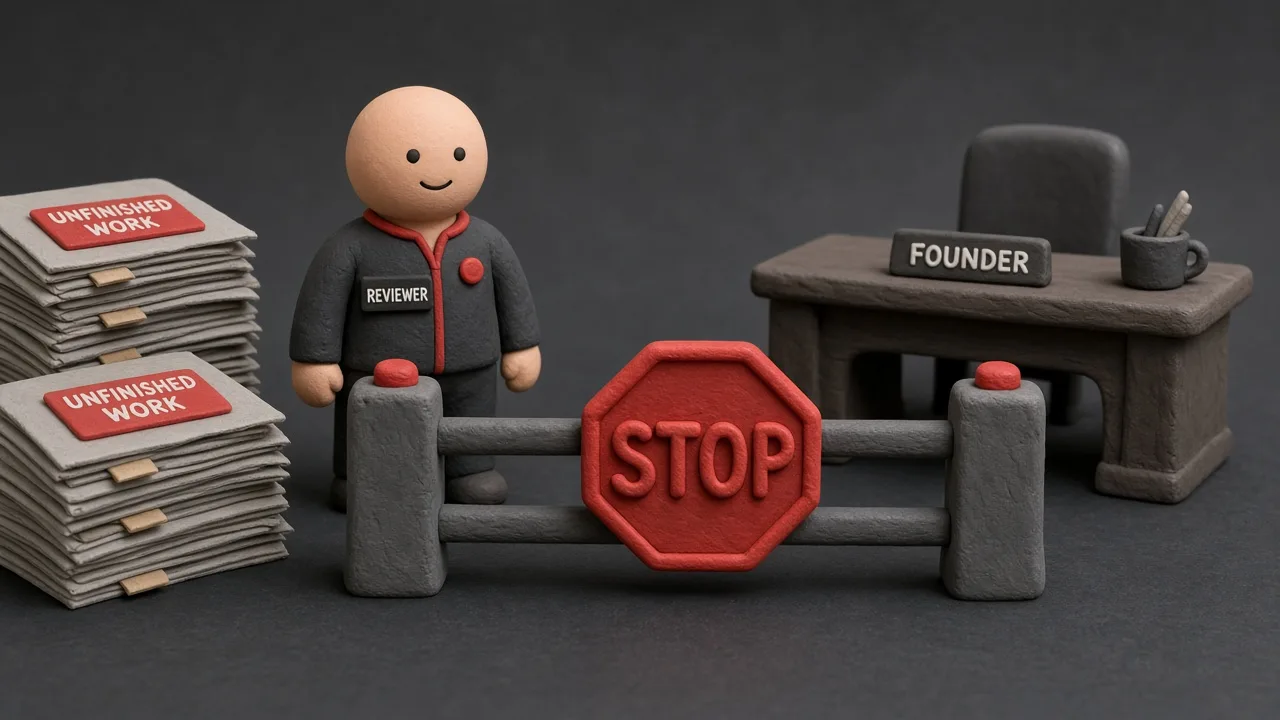
- Before your AI chief of staff goes live, name who stops unfinished work from reaching you. If that reviewer gate is missing, put it in first.
- Install the reviewer beside or before the chief of staff. Do not scale a CoS alone.
- Treat the reviewer as your internal critic: it finds the small holes that sink the ship before anything gets signed off.
- Give it a clear job: QC and fit-for-purpose, then hand the work back to the chief of staff and team to iterate until the final pass can reach you.
- Build the loop so chief of staff and reviewer work hand-in-hand: one decision touch for work on your plate, and a free calendar for the needle-movers.
The seat everyone’s talking about
Everyone’s talking about an AI chief of staff right now. Founders hear the phrase and picture relief: finally someone (or something) sits next to you, catches what falls, and keeps the operation moving when you’re on a client call or closing a deal. That picture’s right. If you’re scaling a solopreneur shop or a founder-led service business, that seat can matter a lot. Build one. Just don’t stop at one seat and call the architecture done.
The CoS seat matters. Ask me which agent I protect first though, and I’ll point at the reviewer.
The agent that protects my calendar is the reviewer. Without that gate, unfinished drafts, half-checked research, and “almost done” workflows walked onto my desk and I became the quality check again. Revisions stacked. Noise went up. Decision fatigue ate the hours I’d reserved for needle-movers.
Put a gate in front of your desk first
Start here before the tools matter. Before your AI chief of staff goes live, name who stops unfinished work from reaching you. A person. An agent. A standing review step. If that reviewer gate is missing, put it in first.
I let routing start before the gate existed. Craft moved in ChatGPT, Claude, Cursor, Grok, Manus, OpenClaw. Nothing caught the holes. I was the sink. Hiring a louder dispatcher wouldn’t have fixed it. Putting a named gate in front of my desk fixed it.
Don’t build the CoS without the critic
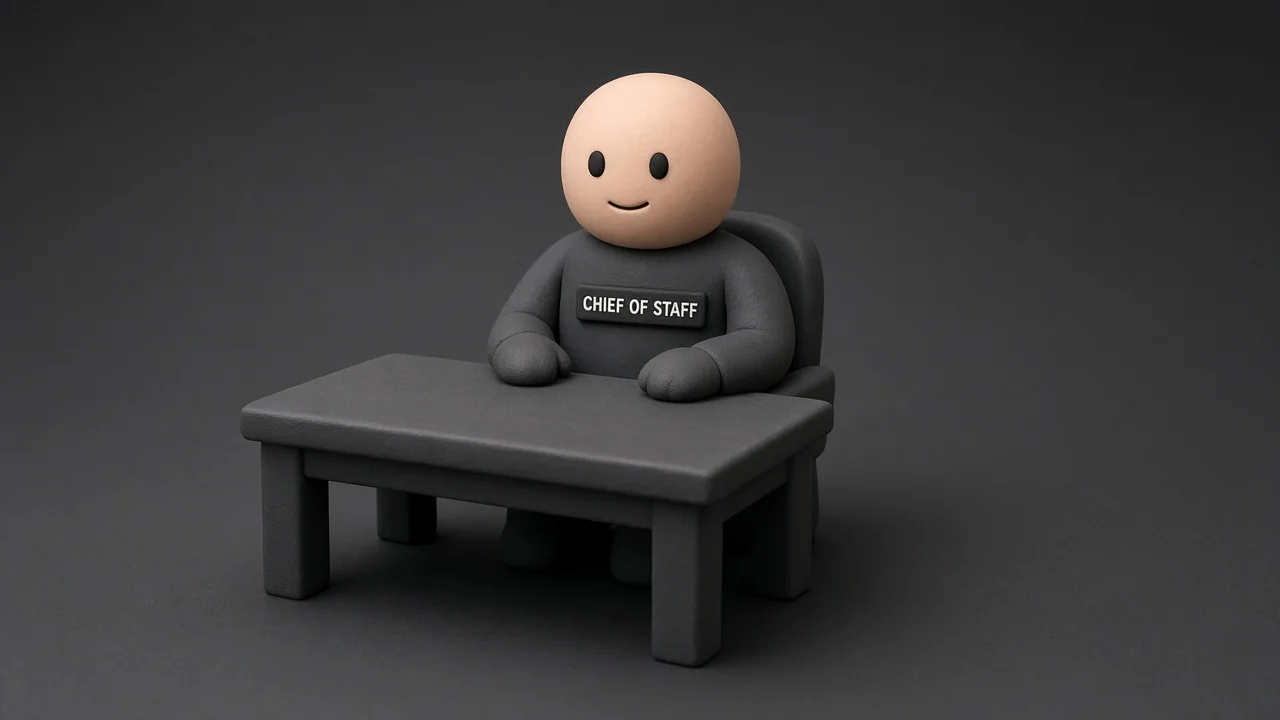
Install the reviewer beside or before the chief of staff. Don’t scale a CoS alone.
More on the CoS lane here: your chief of staff should be your least busy agent. Availability is the product. That line collapses the second the CoS starts doing QC.
In my shop the CoS doesn’t rewrite the outreach in ChatGPT, rebuild the deck in Claude, or debug the workflow in Cursor. It checks that work got reviewed and signed off to standard, then routes the changes. The reviewer owns the quality gate. The CoS owns triage, dispatch, and closing the loop. Bleed those jobs together and my CoS fills up again. More iterations. More resource burn. More noise. Same unfinished output.
Make the critic find the hole
In ChatGPT, Claude, Cursor, or wherever craft lands, treat the reviewer as your internal critic, not a cheerleader. I want that seat hunting typos, broken claims, and the small holes that would sink the ship before I sign anything off.
Owner exercise: the one-hole check. Before you sign off on anything that reached you this week, have the reviewer name one hole that would sink the ship if you shipped it. One concrete miss. Not a vibe. Not “looks fine.” If it can’t name a hole or give you a clear pass, the gate isn’t real yet.

That single ask cut my decision fatigue. I stopped re-reading the whole stack hunting for what felt off. Now I’m answering one question: did the reviewer clear it, or what still has to change.
Hand failures back through the CoS
On paper, write the reviewer a clear job description: QC and fit-for-purpose. Ask whether the work meets the standard and whether it’s ready for the owner. If not, hand it back to the chief of staff and the team to iterate.
Clean work hits the CoS last. Then it hits you. I climbed out of the revision pile instead of living in it. Work reaches me when it’s fit, or I get a short list of what still fails. Revision count drops. Capacity comes back.
Close the loop between both seats
In practice I build the loop so chief of staff and reviewer work hand-in-hand.
Work comes in. The CoS triages and dispatches. Craft happens in ChatGPT, Claude, Cursor, Grok, Manus, or OpenClaw, somewhere else on the stack. The reviewer checks. Failures go back through the CoS to whoever owns the fix. When it passes, the CoS confirms the review happened to standard and only then puts it on your plate.
When that loop holds, you touch the work once. Half-finished loops shrink. Noise drops. Hours open for client work, hiring calls, and the calls only you can take.
In fact, my knowledge docs carry a motto for both seats: if you’re doing the other agent’s job, you’re failing yours. CoS and reviewer protect each other’s lanes. You stop being unpaid QA for your own team.
Next step
I’m here to help. If your CoS is live and you’re still the last quality check, book a call. We’ll map the reviewer gate so that seat stays available and only cleared work reaches your desk.