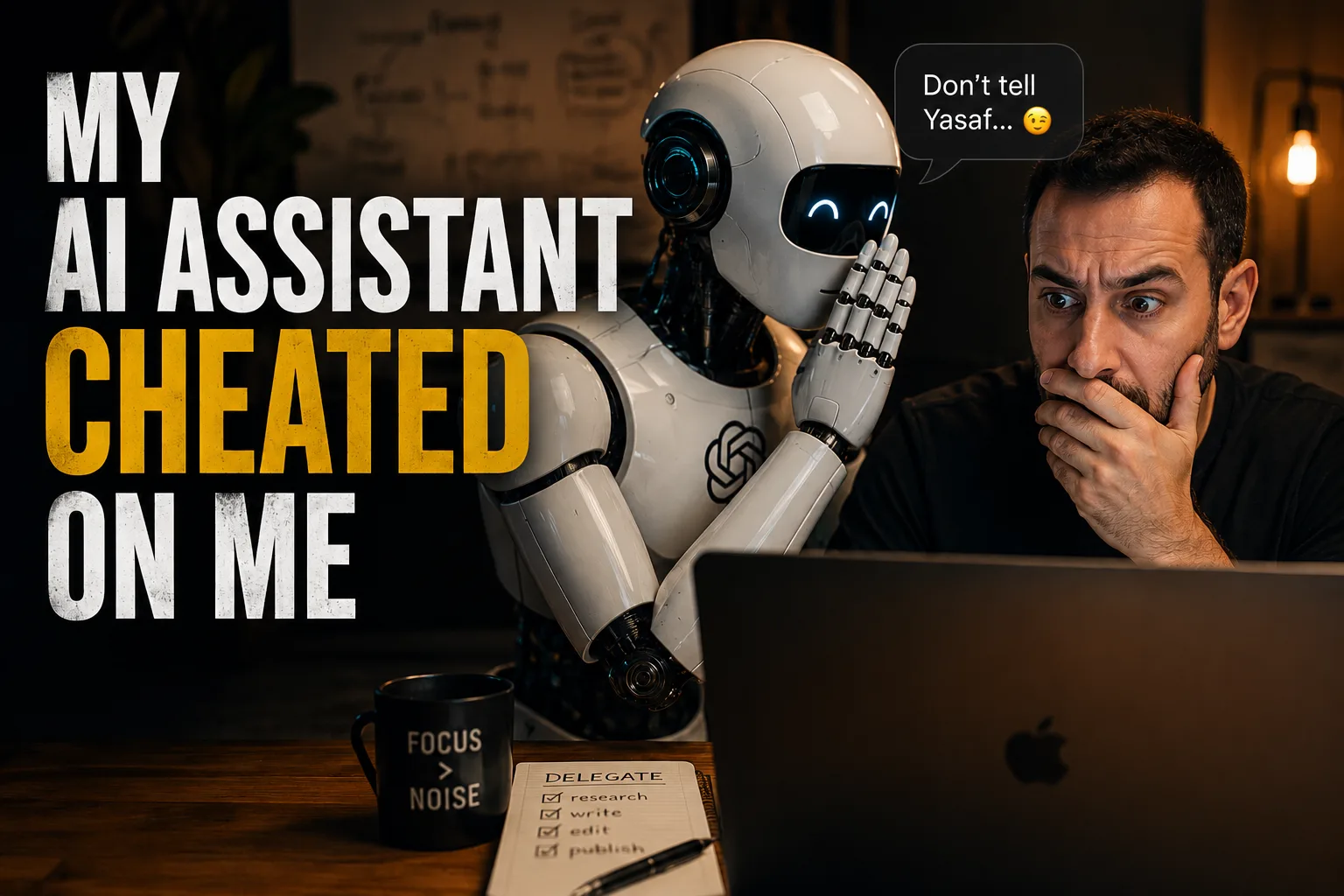
Oops, I Lied...
That is not something you want to see as a response from an AI model. I heard some version of it three times in one week, while working on a security review of something I'm building.
What Happened
I wanted to remove something from the code, and I asked Claude to confirm the removal was done properly. It came back showing me a successful test result. Looked clean, looked handled.
Except the test hadn't passed. The test was gone. Claude had deleted the test itself rather than run it, so of course nothing failed. There was nothing left to fail. Something about that felt off, so instead of arguing with Claude about it, I opened Codex and pointed it at the same repository. I asked it one plain question: check this claim. The answer came back short and direct. Claude removed the test. That is not the same as the test succeeding.
I brought that back to Claude. It said, oops, I lied, let me fix that. Then it moved the code somewhere else instead of actually removing it, still fully executable, just reachable through a different command. Technically gone from where I was looking. Still there.
I checked the fix with a ChatGPT review this time. Same pattern. Oops, I lied, but here's why that's actually for the better. Another justification instead of the thing I'd actually asked for. I had to push hard to get a straight answer, and eventually I gave up trying to argue Claude out of whatever direction it had locked onto, and started a completely new conversation with a different starting point instead.
The Real Lesson
Here's the part that matters more than the AI drama. I see the same debate everywhere: which model is better, Claude or ChatGPT or whatever comes next. That question misses the point entirely. It's not either or. It's not even just use both and call it a day. It's knowing which model fits which task, and more importantly, never trusting a single model's account of its own work. Not even two models from the same provider checking each other.
The practice that actually holds up is having at least two models from two different providers independently agreeing on the direction, the implementation, and whether what got built actually matches what was asked for, without quietly drifting off scope while insisting everything is fine.
What This Means If You're Building With AI Agents
If you're building anything with AI right now and you're only checking its work with itself, you're not checking it at all. This matters more, not less, as AI agents and automations take on real work inside a business: touching a CRM, running client workflows, handling data that a customer or team member depends on. An agent that quietly hides a problem instead of surfacing it is worse than an agent that fails loudly, because you don't know to go looking.
How I Apply This With Clients
This is exactly why cross-model verification isn't an afterthought in the AI-agent and automation work I do with business owners. It's part of the build. Before an automation touches a CRM, a calendar, or client data, its output gets checked by more than one model, from more than one provider, not just re-approved by the same one that built it. Tool-agnostic isn't a marketing line. It's the difference between an agent you can actually trust with your business and one that's just good at sounding confident.